Drainage Bundaberg
Drainage solutions for homes, driveways, yards, acreage and rural properties across Bundaberg and surrounding areas.
Drainage Solutions for Bundaberg Properties
Water sitting where it should not can quickly become more than an inconvenience. Poor drainage around a home, driveway or yard can leave constantly wet ground, wash away gravel and soil, make access difficult and direct runoff towards buildings or other areas of the property.
We provide practical drainage work for residential, acreage and rural properties throughout Bundaberg. Depending on where the water is coming from and where it needs to go, that may involve surface drains, underground pipework, pits, French drains, driveway crossings, trenching or larger property drainage.
The aim is not simply to put a drain in the ground. It is to create a sensible path for water to move away from the problem area and discharge where it can be managed properly.
For properties already showing signs of poor water flow, our yard drainage solutions are a good place to start.
Drainage Services in Bundaberg
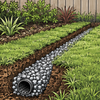
Wet & boggy lawns, standing water and runoff flowing towards the house are all common around Bundaberg homes. Yard drainage can combine surface shaping, collection points and underground drainage to improve water movement.
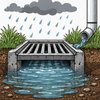
Stormwater systems help collect runoff and surface water before it spreads across the property or pools around buildings. We install and improve pits, pipework and other drainage components to create a more controlled path for stormwater.
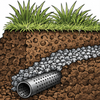
French drains use a gravel-filled trench and perforated drainage pipe to intercept water moving through saturated ground. They are particularly useful along low areas, beside retaining walls and in sections of a yard that remain wet after rain.
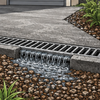
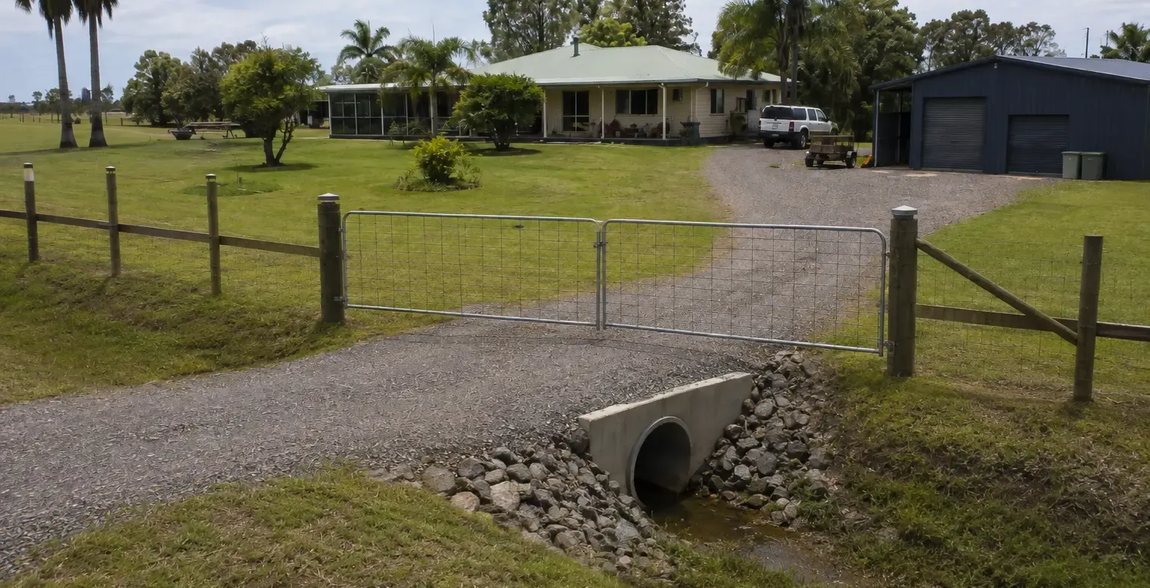
Water crossing or running along a driveway can cause erosion, potholes and washed-out gravel creating issues with safe property access. Driveway drainage may include culverts, cross-drains, pits, channels or drainage along the driveway edge.
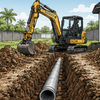
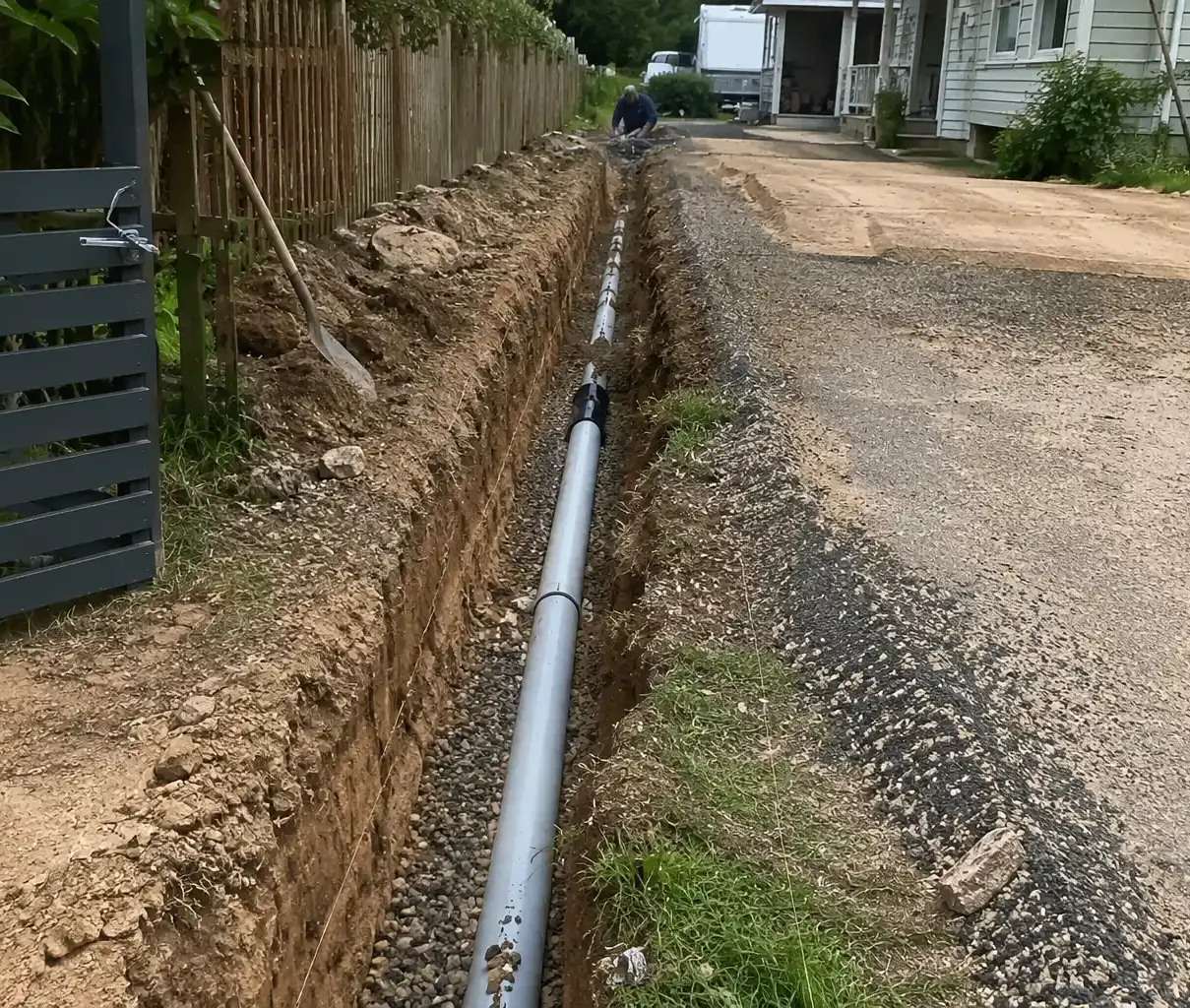
Good drainage relies on pipework being installed at the right depth and with a workable fall. We excavate drainage trenches for stormwater pipe, agricultural pipe, pits and other underground drainage installations with this in mind.
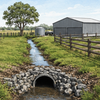
Larger blocks and working properties often need drainage across access tracks, paddock edges, sheds, yards and low-lying areas. Rural drainage is designed around how water moves across the wider property rather than treating one isolated wet spot.
When Your Property Is Not Draining Properly
Drainage problems do not always begin with major flooding. In many cases, the first signs are smaller issues that keep returning whenever there is decent rainfall.
Common problems we can help address include:
- Water pooling in lawns or low sections of the yard
- Constantly soft, muddy or boggy ground
- Runoff travelling towards the house, shed or garage
- Water collecting beside slabs or retaining walls
- Driveway edges washing away
- Gravel driveways developing ruts, potholes or erosion
- Downpipes discharging onto the ground with nowhere for the water to go
- Existing drains that do not collect or move water effectively
- Water crossing access tracks or property entrances
- Saturated areas around sheds, tanks or rural infrastructure
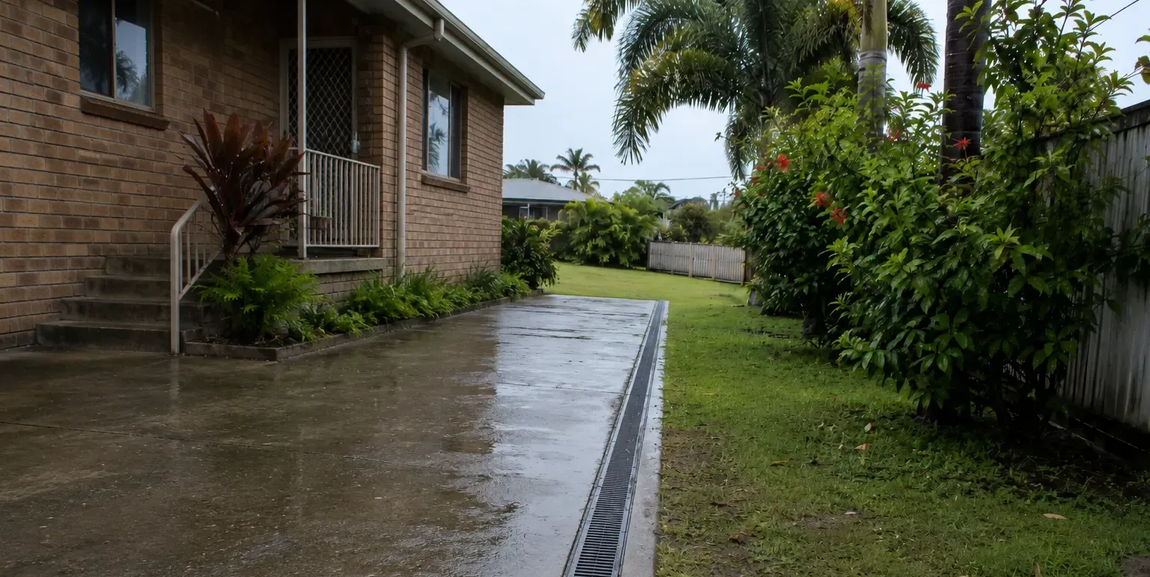
The right fix depends on how the water reaches the area, where it naturally wants to travel and where it can safely discharge. Treating those three points together generally produces a much better result than simply adding a drain at the lowest visible spot.
A Drainage System Has to Work With the Property
Before choosing a drainage method, the important part is understanding the movement of water across the site.
Identify the Source
The problem may be roof water, surface runoff, groundwater, water entering from higher ground or a combination of these or multiple other sources.
Work Out the Flow Path
Levels, slopes, buildings, driveways, retaining walls and other features all influence where water naturally travels and where it becomes trapped.
The Right Method
Once the cause is clear, the solution might involve pits and solid pipe, a French drain, surface drainage, a culvert, trenching or a combination of systems.
Create a Suitable Outlet
Collecting water only solves half the problem. It then needs to be directed to an appropriate location without creating another wet area elsewhere.
From Residential Blocks to Rural Properties
Homes & Residential Yards
Residential drainage often involves managing roof water, wet lawns, side access, low points and runoff around the home. These jobs can require relatively compact drainage systems, but getting the levels and discharge right is still important.
Semi-Rural Properties
Larger residential blocks can have much greater volumes of surface runoff and longer distances between the problem area and a practical outlet. Drainage may extend through yards, beside sheds, along boundaries or across access areas.
Stop Water From Creating a Bigger Problem
Repeated water movement can gradually change a property.
A small amount of runoff travelling across the same area can strip away soil or gravel. Saturated ground can become increasingly soft under vehicles or foot traffic. Water collecting beside buildings can keep surrounding soil wet long after the rain has stopped.
Fixing the drainage gives that water a defined route instead of allowing it to find its own way across the property every time it rains.
For driveway or access problems in particular, it is worth looking at driveway drainage before repeatedly replacing gravel or repairing washed-out sections without addressing the water causing the damage.
Bundaberg Drainage FAQs
What type of drain is best for a wet backyard?
There is no single drain used for every wet yard, but the choice is usually fairly clear once the source of the water is identified.
Surface water that pools in a low point is generally collected with pits or surface drainage, while water moving through saturated soil is often better suited to a French drain. Many yards need a combination of the two.
Can you drain water away from the side of a house?
Yes. Water beside a house can usually be intercepted and redirected using surface drainage, pits and pipework, French drains or changes to the surrounding drainage path.
The system should direct water away from the building rather than simply moving it a few metres further along the same area.
Can drainage stop a gravel driveway washing out?
Yes, when uncontrolled water is the cause. Culverts, cross-drains, table drains and other driveway drainage can redirect runoff before it travels along or across the driveway and removes gravel.
The damaged driveway may still need repair, but controlling the water helps prevent the same damage returning.
Do French drains collect surface water?
They can collect some surface water, but that is not their main purpose. French drains are primarily designed to intercept water moving through wet or saturated ground.
Where large volumes of surface runoff are present, a surface drain or pit system will generally be more effective.
Can you install new stormwater pipework underground?
Yes. We can trench for and install underground stormwater drainage, including pipe runs connecting collection points and pits to an appropriate outlet.
Do you work on acreage and rural properties?
Yes. We provide drainage for larger residential blocks, acreage and rural properties as well as standard residential sites.
This can include sheds, access tracks, driveways, low areas and broader property water-control work.
Drainage Services Across Bundaberg and Surrounding Areas
We work across Bundaberg and nearby residential, acreage and rural areas, providing drainage solutions suited to everything from suburban yards to larger properties outside town.
If you are unsure whether your property is within our normal working area, see the full Bundaberg drainage service areas page or simply get in touch.
Need Better Drainage Around Your Property?
If water is pooling, washing through your driveway or repeatedly leaving parts of your property wet, we can help work out a practical way to manage it.
Call, message or request a quote for drainage work in Bundaberg and surrounding areas.